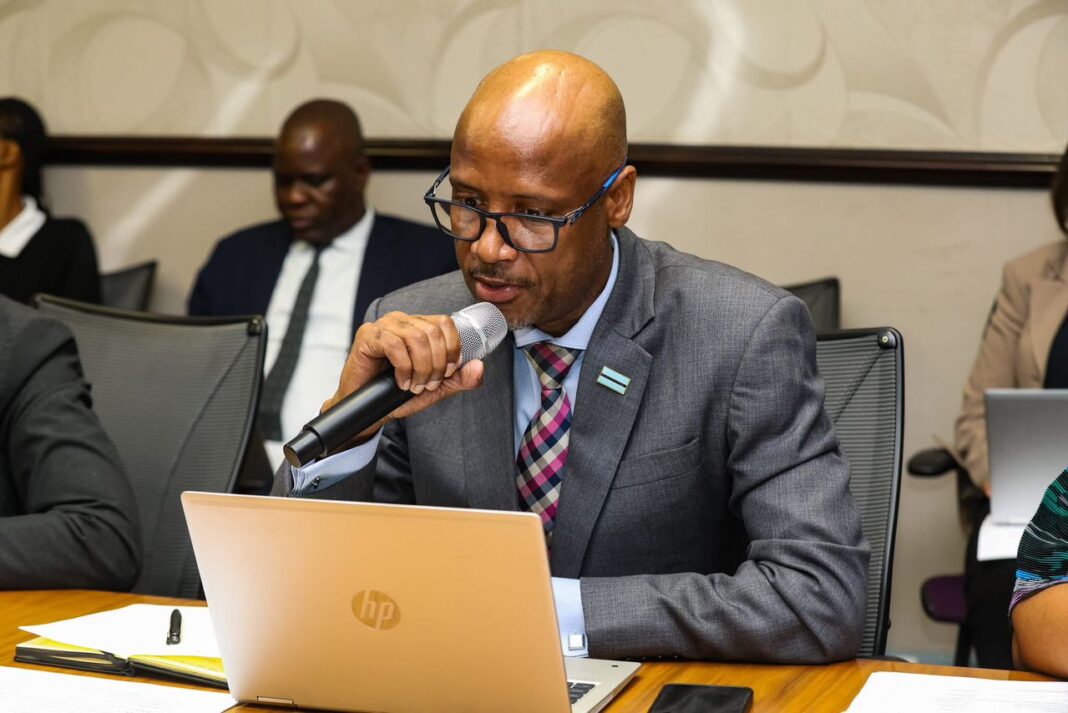

Tshepiso Seth Ndzinge-Makhamisa (PhD)
“People come and go… yet the web of fundamental rights and justice which a nation proclaims must not be broken.” These words uttered by the late Nelson Mandela must ring true for any constitutional democracy.
As the dust settles after the first few blows were landed in the debate over the establishment of the Constitutional Court for Botswana, one thing is clear: the nation remains gripped by the political and emotive blows thrown and counterthrown in the public arena.
A time must come, though, for us, as Batswana, to pause and critically assess the substance and the real-life implications surrounding the establishment of a Constitutional Court. Let us leave emotions and grandstanding aside, let us engage, soberly and deliberately, with the issues themselves.
The esteemed judges of our superior courts have referred to a constitution as a living, organic instrument. It is the document upon which a country’s institutions, democracy, the rule of law is founded and based. It holds, like an African calabash holding water, the hopes, dreams, aspirations of its citizens. Broken or cracked, the water spills, and nothing remains.
A country’s judicial system, therefore, must be the ultimate defender and guarantor of this sacrosanct document. The culture and the history of a state will define the form that its judicial system takes. Some countries, like South Africa, have a Constitutional Court, and some, like the USA, a general court as its apex court (the Supreme Court). In Botswana’s case, our choice, was not a choice but a colonial legacy. Our whole judicial system, was a transplant, modified and tweaked upon Independence, but a transplant, nonetheless. That it has served us, is a testament to the people, the country and not the virtues of the system itself.
The argument based on keeping things as they are, that these have served us well is both fundamentally flawed and counter to an evolving, maturing democracy. It is clear, that both from within and outside of the judiciary the reforms aimed at creating functional specialisation to create a more just, transparent, efficient system to serve the needs of citizens has been well received.
The winds of constitutional change must therefore also sweep, but in what direction is what must be debated. As mentioned earlier, the design of a judicial system is contextual. This decision is based on several factors which include ideology, history and the understanding of constitutional supremacy. It must be noted, that, unlike the country from which we inherited our judicial system we have a written Constitution, and such constitution has been firmly upheld by our courts through the principle of constitutional supremacy. The Botswana Constitution is supreme. This is our context.
As I have seen echoed in some quarters, the point is not whether our courts have competence. They do. Nor is it a denial of the jurisprudential strides that have been made in interpreting and upholding the Constitution. Our superior courts have, over decades, demonstrated independence, intellectual rigour and fidelity to the rule of law.
Institutional reform, however, is not an indictment of past performance. It is an acknowledgment that young constitutional democracies evolve. They must evolve. The question, therefore, is not whether our courts can interpret the Constitution. It is whether the demands of a modern constitutional state now justify a structure designed specifically to safeguard, develop and entrench constitutional supremacy in a more deliberate, intentional and focused manner.
Constitutional design is ultimately about foresight, not just about current generations but future generations, born and unborn. As our country develops further, our constitutional litigation grows in complexity with it. As difficult issues of separation of powers, elections, socio-economic and cultural rights, and the rights of the vulnerable and marginalised are faced, we must keep pace.
A Constitutional Court signals that constitutional questions are not incidental to ordinary litigation, nor will they ever be. The answers to constitutional questions strike at, or preserve the soul of the republic. It must be commended that a country in peace times is attempting to further protect and enhance its democracy and rule of law by establishing a specialised Constitutional Court to grapple with questions that will define the future of Botswana.
As a nation, the dialogue must centre on the when and the how. The need for the court lies at the very heart of who we are as a nation – a nation founded on botho, compassion, respect for human rights and a deep respect for law(molao). A 21st-century Motswana deserves a Constitutional Court as the defender of their birthright.
Tshepiso Seth Ndzinge-Makhamisa(PhD) is the Managing and Founding Partner of Ndzinge-Makhamisa Law Group, where he practises in civil litigation, constitutional law, and human-rights-based advocacy. He serves as a board member of the Botswana Family Welfare Association (BOFWA) and works closely with disability-focused civil society organisations on advocacy, policy development, and legal reform.
He is a Lecturer in Law at the University of Botswana. He holds a Master of Laws from the University of Pretoria and a PhD in Public Law from the University of Cape Town. His work across legal practice, academia, and civil society is centred on advancing inclusive justice and strengthening human rights protection in Botswana and the region.