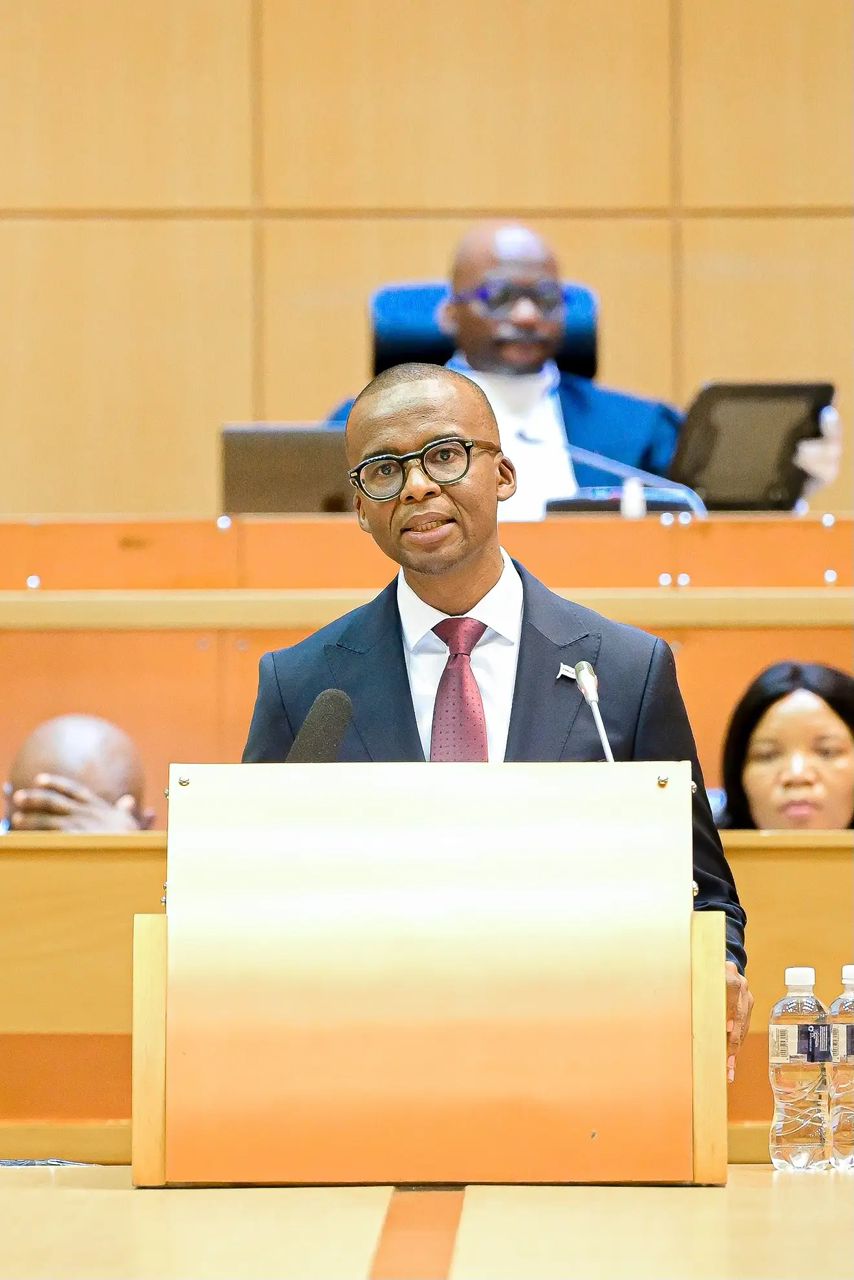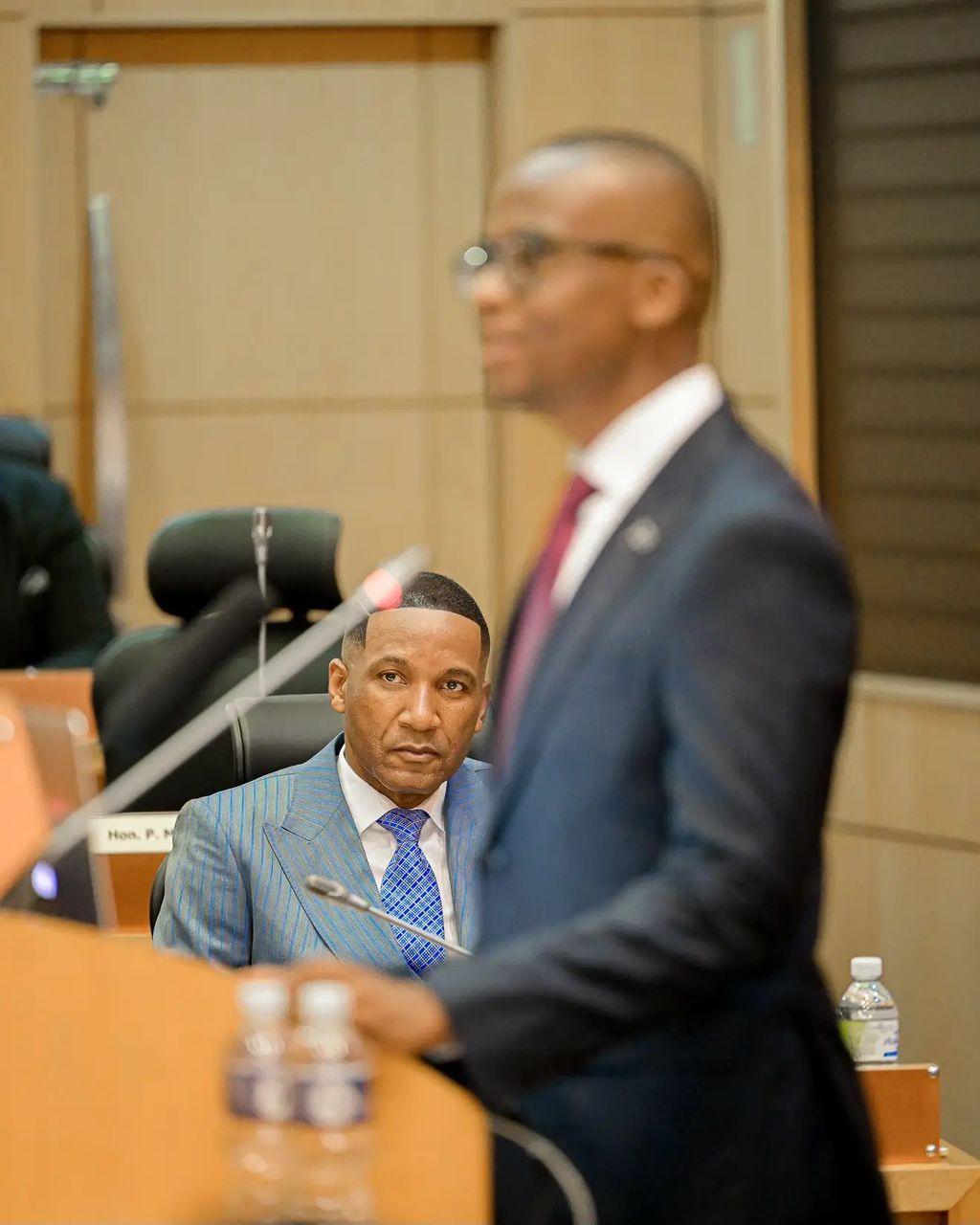

In the budget speech delivered to the National Assembly on February 9, 2026, Minister of Finance Ndaba Nkosinathi Gaolathe unveiled a P103.58 billion spending plan for the 2026/2027 financial year. Under the theme “A New Era of Economic Transformation and Fiscal Prudence,” the budget signals significant shifts in government spending priorities, with major restructuring in how funds are distributed among key ministries. While the total Ministerial Recurrent Budget stands at P67.78 billion, the Development Budget has been set at P23.38 billion, reflecting a continued focus on infrastructure maintenance and high-return projects.
Ministry for State President, Defence and Security
The Ministry for State President, Defence and Security secured the top spot in the recurrent budget with an allocation of P13.05 billion. This represents an increase of over P500 million from the previous year, largely driven by the operational requirements of the Botswana Defence Force (BDF) and Botswana Police Service (BPS). The allocation also covers the absorption of Special Constables into the Regular Constable Cadre. On the development side, the Ministry was allocated P1.99 billion, with over 56 percent directed toward security organs and P250 million earmarked for a new air support project.
Ministry of Local Government and Traditional Affairs
In a significant shift, the Ministry of Local Government and Traditional Affairs became the second-largest recipient of recurrent funds with a massive P12.99 billion allocation. This represents a sharp 15.2 percent increase, primarily due to the transfer of the Primary Health Care function—and its associated budget—from the Ministry of Health to Local Government. This budget will also support social welfare programmes like the Old Age Pension and destitute allowances. Furthermore, the Ministry received P2.86 billion for development spending, which will fund social welfare programmes like Ipelegeng, primary education facilities, and internal roads.
Ministry of Child Welfare and Basic Education
The Ministry of Child Welfare and Basic Education took the third position in the recurrent budget with P11.83 billion. While this is a modest 1.3 percent increase, the funds are critical for covering teachers’ salaries, service charges, and the “Project Bula Buka” initiative designed to aid out-of-school youth.
Ministry of Health
Conversely, the Ministry of Health saw its recurrent budget drop by 16.4 percent to P7.51 billion. This decrease is not a cut in services but a result of the administrative transfer of Primary Health Care funds to the Ministry of Local Government. The remaining budget focuses on drugs, vaccines, medical specialists, and the establishment of the National Health Insurance.
Ministry of Higher Education
The Ministry of Higher Education saw a massive surge of 58 percent, bringing its recurrent allocation to P7.37 billion. This substantial increase is due to the Tuition Fees vote being transferred back to this ministry from the Ministry of Finance.
Ministry of Minerals and Energy
Turning to capital projects, the Ministry of Minerals and Energy secured the largest share of the development pie at P5.23 billion, representing over 22 percent of the total development budget. Key projects include P2.27 billion for Botswana Power Corporation (BPC) power imports and P1.37 billion for the North-West Transmission Grid Phase II to connect Chobe and enable exports.
Ministry of Transport and Infrastructure
The Ministry of Transport and Infrastructure received the second-largest share of the development budget at P3.86 billion. This funding is earmarked for major road networks, including the reconstruction of the Nata-Maun and Francistown-Nata roads, and the A1 Dualling project. On the recurrent side, the Ministry received P1.93 billion, with the bulk going toward fuel for the government fleet and subventions for the Civil Aviation Authority.
Ministry of Water and Human Settlement
The Ministry of Water and Human Settlement followed closely in development spending with P3.62 billion. The focus here is on completing major water schemes like the North-South Carrier pipeline and sanitation projects in Kanye and Lobatse.
Ministry of Lands and Agriculture
The Ministry of Lands and Agriculture was allocated P2.41 billion for its recurrent budget, a slight decline due to scaled-down subventions to State-Owned Enterprises. For development, it received P1.77 billion to support land servicing, Special Economic Zones, and the new regulated cultivation of industrial hemp and medicinal cannabis.
Ministry of Trade and Entrepreneurship
The Ministry of Trade and Entrepreneurship was allocated P1.20 billion for its recurrent budget, mainly for State-Owned Enterprise operational costs.
Ministry of Finance
Finally, the Ministry of Finance saw a significant drop in its recurrent budget to P1.14 billion. This 62.68 percent decrease is largely because it no longer holds the tuition fees vote, which has been returned to Higher Education.
Minister Gaolathe emphasized that while the budget is tight, the allocations are designed to be “reform-driven,” ensuring that every Pula spent contributes to the “New Era” of productivity and fiscal discipline.