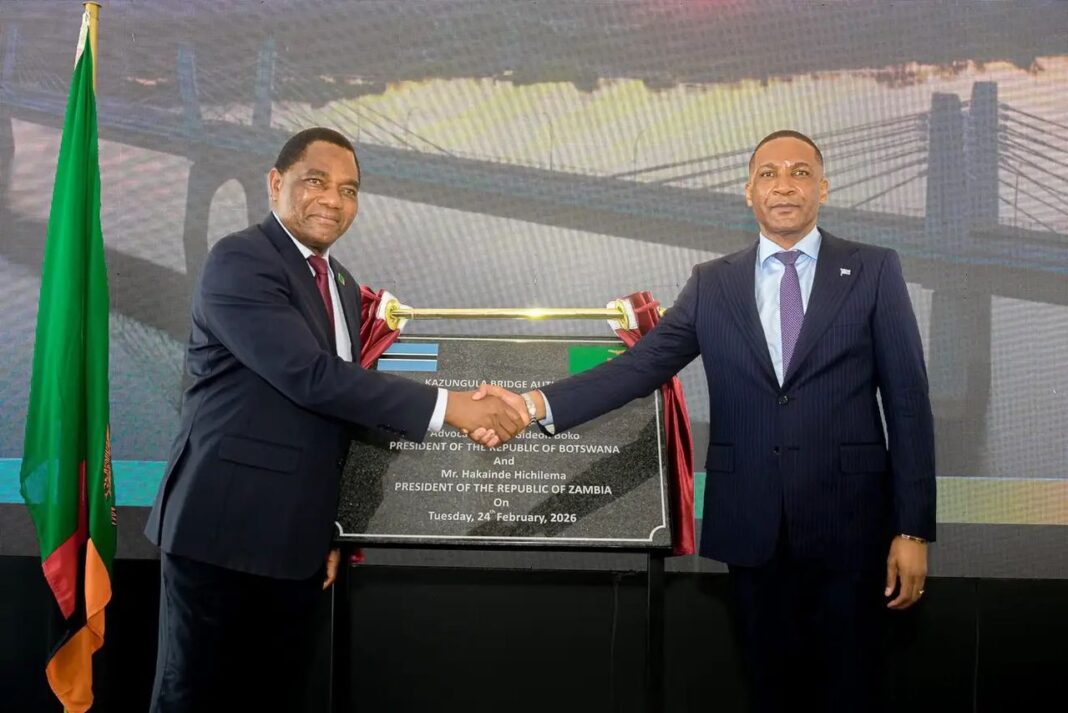

Botswana and Zambia have further cemented their enduring bilateral relationship by officially commissioning the Kazungula Bridge Authority. This marks a transformative step in the joint management of the Kazungula Bridge and its One-Stop Border Post. The commissioning ceremony, held at the Landing Bay of the iconic bridge, saw Botswana’s President Duma Gideon Boko welcome Zambian President Hakainde Hichilema. Their meeting was more than a ceremonial ribbon-cutting; it was a reaffirmation of the deep bonds between the two sister nations and a bold statement of their shared commitment to regional integration. Following the ceremony, the two governments convened in Kasane to sign an addendum agreement, formally establishing the Authority. To understand the true weight of this development, one must look at the broader picture of African trade, the strategic importance of this specific border, and the ambitious goals of the African Continental Free Trade Area.
The Strategic Importance of the Shared Border
The border between Botswana and Zambia, defined by the waters of the Zambezi River, is one of the most critical logistical nodes in Southern Africa. Historically, crossing this boundary relied on slow, cumbersome pontoon ferries, creating massive bottlenecks along the vital North-South Corridor that connects the port of Durban in South Africa to the copperbelt in Zambia and the Democratic Republic of Congo.
The construction of the Kazungula Bridge transformed this chokepoint into a seamless conduit. It is no longer just a physical connection between two nations but a vital artery for the entire Southern African Development Community. A well-managed border here means faster delivery of goods, fresher agricultural exports, and dramatically lowered supply chain costs for businesses across the region.
The Role and Aims of the AfCFTA
To grasp the full potential of the Kazungula Bridge Authority, it must be viewed through the lens of the African Continental Free Trade Area. Launched to create a single continent-wide market for goods and services, the AfCFTA aims to progressively eliminate tariffs on the vast majority of goods, significantly boosting intra-African trade. Beyond tariffs, the agreement seeks to harmonise customs and border procedures to reduce transit times and trade friction. It also encourages the development of regional value chains, allowing African nations to add value to their raw materials before exporting, while facilitating the free movement of capital, goods, and people. Ultimately, these measures are designed to drive economic growth and lift millions out of poverty. However, treaties and agreements on paper require physical infrastructure and efficient governance on the ground to become reality, which is exactly where the new Authority steps in.
How the KBA Furthers the Aims of AfCFTA
Both leaders emphasised that the establishment of the Authority is a critical leap toward fully utilising the bridge to broaden regional trade and maximise AfCFTA opportunities. During the ceremony, President Boko made a landmark announcement, stating that the Kazungula border will soon transition into a 24-hour nonstop border system. This transition directly operationalises the core tenets of the AfCFTA by eliminating the overnight delays that plague African logistics, thereby enabling the continuous movement of goods and people.
By drastically reducing congestion and wait times at the One-Stop Border Post, the Authority will lower the exorbitant transport costs that have historically hindered intra-African trade. Furthermore, this centralised management ensures the sustainable upkeep of the bridge, streamlines cross-border compliance, and enhances legitimate revenue generation for both nations. President Hichilema highlighted a shifting paradigm in African governance, calling for a change anchored in accountability, collaboration, and measurable impact. He stressed that strengthening SADC trade cannot rely on rhetoric alone; it requires the practical, results-driven cooperation that the Kazungula Bridge Authority embodies.
A Shared Prosperity
The Kazungula Bridge is more than steel and concrete; it is the physical manifestation of a united economic vision. Through the formal establishment of the Authority and the upcoming 24-hour border operations, Zambia and Botswana are not just facilitating local crossings. They are actively tearing down the invisible barriers to intra-African trade, ensuring sustainable infrastructure management, and laying down the asphalt for shared prosperity across the continent.