
Analyser
Botswana has been celebrated as one of Africa’s most remarkable economic success stories. At independence in 1966, it was among the poorest countries in the world, with limited infrastructure, minimal industrial capacity, and a narrow economic base. The discovery and prudent management of diamonds transformed the country’s fortunes.
Through sound fiscal policy, political stability, and long-term planning, Botswana built roads, schools, hospitals, and public institutions that became models of governance across the continent.
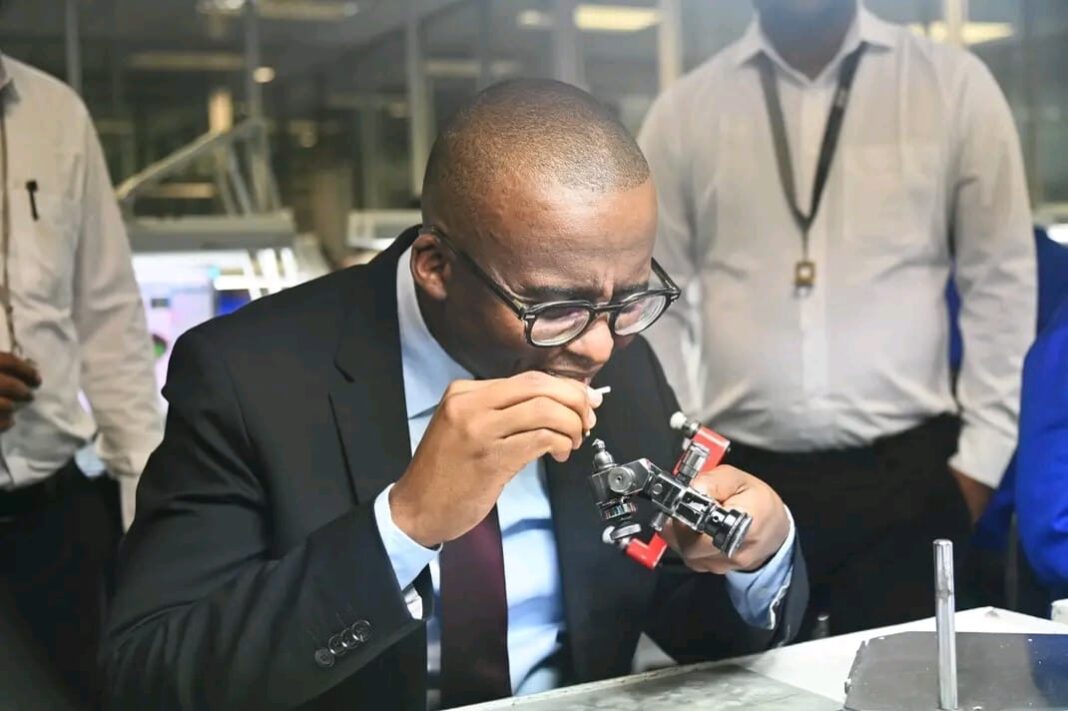
Diamonds built modern Botswana.
But all that is now history and as successful as it was, can not substitute for strategy in the present. The very model that delivered prosperity now exposes structural vulnerabilities.
Botswana’s economy stands at a crossroads and its transformation matters now because the pressures facing the country are no longer distant forecasts but measurable realities reflected in the triple challenges to social transformation being unemployment, poverty and inequality. As a result, unemployment data, inequality indicators, poverty levels, and shifting global markets all spell doom for this once flourishing economy.
These are hard facts that all Batswana must accept. The economic boom period is behind us. And this is a time to build back and definitely differently this time around.
An urgent case for this rebuilding has been repeatedly echoed in different platforms where experts have gathered to unpack the economy. The economic challenges of modern day Botswana do not only reflect a dire need for industrialisation and moving away from diamond dependency by building a diversified economy, it’s a reflection of a shared national development agenda we must all embrace.
Gone are the days of mere lip service or simply empty rhetoric. This era presents an opportunity for Botswana to redraw its strategies bordering on inclusive growth, a GDP anchored by all sectors, and an export oriented economy.
The Youth Unemployment Crisis
However, at the centre of all this lies a national crisis. The youth unemployment scourge. This is one of the clearest signals that transformation can not be postponed. Its now or never.
Estimates in recent labour surveys and international economic assessments place unemployment among young people aged 15–24 in the high 30s to low 40s percent range, with some estimates approaching approximately 43 percent. In practical terms, nearly four out of every ten young Batswana actively seeking work cannot find employment.
This is not a marginal statistic. It represents tens of thousands of young people navigating adulthood without stable income, work experience, or career pathways.
Beyond open unemployment, there is the equally troubling category of young people not in education, employment, or training. Past surveys have placed NEET rates around 40 percent, with young women disproportionately affected. This means a significant portion of the youth population is neither building skills nor participating in productive economic activity.
Sadly, an economy that can not absorb its youth risks more than lost productivity. It risks social strain, reduced lifetime earnings, and diminished innovation capacity. Young people are not simply job seekers; they are future taxpayers, entrepreneurs, and community leaders. When nearly half of them struggle to enter the labour market, the cost is both economic and social.
It has been proved that youth unemployment in Botswana is largely structural rather than cyclical. It reflects mismatches between educational outcomes and labour market demands, limited diversification in the productive sectors of the economy, and heavy reliance on public sector employment. While the public service has historically absorbed many graduates, fiscal pressures limit its expansion. Without private-sector growth in diversified industries, the pipeline of opportunities remains constrained. Thus,
economic transformation, therefore, is fundamentally about jobs.
Inequality: Growth Without Inclusion
While Botswana has achieved upper-middle-income status, it remains one of the most unequal societies in the world. The Gini coefficient which is a standard measure of income inequality where 0 represents perfect equality and 1 represents perfect inequality-has been estimated between approximately 0.53 and above 0.60 in various assessments over the years. Any figure above 0.50 indicates very high inequality.
What does this mean in lived reality?
It means that national wealth is concentrated among a relatively small segment of the population, while many households experience limited upward mobility. It means there is a widening gap between the rich and the poor or the haves and have notes. Further, it means that economic growth has not translated evenly across regions, genders, and income groups. Consequently, urban centres tend to fare better than rural areas. Formal sector employees have greater security than informal workers while those with access to capital and networks advance faster than those without.
But for a nation that was once hailed an economic miracle, high inequality has weakened the social fabric. It has constrained domestic demand because purchasing power is concentrated rather than broadly distributed. And it has limited social mobility, making it harder for children born into low-income households to access quality education, healthcare, and entrepreneurial opportunities.
If not addressed, over time, inequality can erode trust in institutions if growth appears disconnected from broad-based improvement in living standards.
Therefore, economic transformation is not merely about expanding GDP; it is about ensuring that growth becomes inclusive. Diversifying into labour-intensive sectors, strengthening small and medium enterprises, and supporting rural value chains can help distribute opportunity more evenly across society.
Poverty in an Upper-Middle-Income Country
Botswana’s poverty statistics further underscore the need for structural reform. Despite decades of diamond-driven growth, estimates suggest that roughly 13 to nearly 20 percent of the population lives below international poverty lines. For a country classified as an upper-middle-income, this is a significant proportion.
Poverty in Botswana is often concentrated in rural communities, among female-headed households, and among those with limited access to formal employment. While social protection programmes have provided important safety nets including food baskets, old-age pensions, and destitute allowances, these interventions, though vital, are largely redistributive rather than transformative.
Redistribution can alleviate hardship, but it does not substitute for sustainable job creation. Without diversified economic growth, poverty reduction becomes a mirage. The challenge is not simply to reduce poverty temporarily but to prevent its intergenerational transmission.
In understanding this conundrum, worth noting is that when youth unemployment intersects with inequality and persistent poverty, the result is structural vulnerability. A young person born into a low-income rural household faces higher barriers to education quality, limited exposure to formal sector networks, and fewer opportunities for entrepreneurship. Breaking that cycle requires deliberate transformation policies that expand access to capital, markets, and skills development.
In all this, Botswana’s diamond industry remains a pillar of the economy, contributing significantly to exports, government revenue, and foreign exchange earnings.
However, reliance on a single commodity exposes the country to external shocks.
Global diamond demand is influenced by factors beyond Botswana’s control: economic cycles in major consumer markets, shifts in luxury spending patterns, technological advances in synthetic diamonds, and geopolitical trade dynamics. When global demand slows, export revenues decline. When revenues decline, fiscal space tightens. Budget deficits widen. Public spending faces constraints.
The volatility of commodity-dependent economies is well documented in economic literature. Countries heavily reliant on a single export often face boom-bust cycles. During boom periods, revenues expand rapidly, sometimes creating fiscal complacency. During downturns, painful adjustments follow.
To this end, Botswana has managed this dynamic better than many resource-rich nations, but structural vulnerability remains.
Economic transformation is, therefore, a form of risk management. By expanding sectors such as agro-processing, renewable energy, tourism value chains, financial services, logistics, creative industries, and digital technology, Botswana can reduce exposure to commodity volatility.
Diversification does not mean abandoning diamonds. It means ensuring that diamonds are not the only engine of growth.
Historically, diamond revenues have enabled Botswana to finance an expansive public sector. Government employment has been a key source of stable income for many households. Public investment has driven infrastructure development and social services.
Nonetheless, fiscal sustainability can not rely indefinitely on resource rents. As revenue growth slows or fluctuates, the government’s ability to expand public employment or sustain rising wage bills becomes constrained.
Resultantly, persistent deficits increase borrowing pressures and limit flexibility in responding to shocks.
Having a diversified economy strengthens the tax base. Private-sector growth generates corporate taxes, income taxes, and consumption taxes across a broader range of activities. This enhances fiscal resilience and reduces reliance on a single revenue stream.
Transformation, therefore, is not only about employment; it is about safeguarding the state’s long-term financial stability.
Botswana operates within a rapidly evolving regional and global environment. Across Africa, countries are repositioning themselves in emerging industries. Some are investing aggressively in digital infrastructure, fintech ecosystems, and innovation hubs. Others are pursuing renewable energy transitions or building manufacturing clusters linked to continental trade agreements.
The African Continental Free Trade Area (AfCFTA) opens opportunities for regional value chains, but only for countries prepared to compete. Without diversification, Botswana risks becoming primarily an importer of finished goods rather than an exporter of higher-value products and services.
In lieu of the above, economic transformation must align education systems with industry needs, encourage research and development, and streamline regulatory frameworks that support entrepreneurship. Bureaucratic bottlenecks, slow licensing processes, and limited access to finance can stifle innovation. Reform in these areas is not cosmetic; it is foundational.
Transformation that excludes large segments of society can not succeed. Women, youth, rural communities, and small-scale entrepreneurs must be central to diversification strategies. Access to finance remains a critical barrier for many small businesses. Collateral requirements, high interest rates, and limited venture capital ecosystems restrict expansion.
This means supporting small and medium enterprises is particularly important because they are often more labour-intensive than large capital-heavy industries. SMMEs create local employment, stimulate domestic supply chains, and foster entrepreneurship culture.
Therefore as a nation maps a new transformational journey, rural transformation will also deserve attention. Agriculture, if modernized and linked to processing industries, can generate employment while reducing import dependence.
Climate-smart farming techniques, irrigation investments, and access to regional markets can reposition agriculture as a viable contributor to GDP and job creation.
It must be understood that economic transformation is not only structural; it is psychological. This, therefore, advances the notion that nations shape their futures partly through collective belief systems. With Botswana’s economic narrative having been anchored in diamonds; this calls for a paradigm shift in the the national psyche. While that story reflects success, it can inadvertently narrow imagination.
A country that believes its prosperity depends solely on mineral extraction may underinvest in innovation ecosystems. Conversely, a country that sees itself as capable of exporting technology, services, creative products, and renewable energy solutions broadens its horizon.
Transformation requires confidence. The confidence that local entrepreneurs can compete regionally, that young innovators can build startups, that manufacturing clusters can emerge, and that value can be added domestically rather than exported in raw form.
Some may argue that Botswana has time that gradual adjustment is sufficient. But delay carries risks.
Furthermore, youth unemployment does not remain static; prolonged joblessness reduces skills, weakens morale, and increases social vulnerability. Inequality entrenches itself over time, making redistribution more expensive and less effective. Poverty that persists across generations becomes harder to reverse.
Global economic transitions are accelerating. Renewable energy markets, digital economies, and green industrial policies are evolving rapidly. So, countries that move early capture investment flows and technological partnerships. Late entrants often face steeper competition and diminished leverage.
In all honesty, transformation undertaken proactively allows for strategic planning and social cushioning. Meanwhile, on the other hand,transformation forced by crisis is often abrupt and painful.
Economic transformation for Botswana should prioritize several pillars like: diversification into high-potential sectors beyond mining, alignment of education and vocational training with market demand, strengthening of SMMEs and entrepreneurship ecosystems. Additionally, this must entail reform of regulatory and business environments to attract investment, expansion of digital infrastructure, and innovation capacity, inclusive policies that address gender, regional, and youth disparities.
These pillars are interconnected. Job creation will supports poverty reduction whereas reduced inequality will strengthen social cohesion. More to this,
diversification will enhance fiscal stability.
Together, they can reinforce resilience.
Botswana’s past demonstrates what disciplined leadership and strategic resource management can achieve. But past success can not guarantee future prosperity. The statistics of youth unemployment nearing 40 percent or higher, a Gini coefficient above 0.50, poverty affecting up to one-fifth of the population are not abstract indicators. They represent real households navigating uncertainty. These are the downtrodden Batswana in most rural areas where development hardly reaches. This means the ordinary citizenry who, for decades, were systemically excluded from the topic of economic growth by design. These are thousands of Batswana deprived of wealth, healthcare, education and a quality life owning to the aforementioned challenges.
As a solution, economic transformation, in practice and not theory, matters now more than ever because pressure is mounting. It matters because inequality limits the full expression of national potential. It matters because global markets are evolving faster than ever before. It matters because resilience is built before crisis, not during it.
The choice before Botswana is not between stability and change. It is between controlled, inclusive transformation today and reactive adjustment tomorrow.
Diamonds built Botswana’s foundation. But transformation must build its future. If Botswana achieved it in its first ever phase of development post – independence, then it can surely be achieved now with a reoriented national psyche towards development.