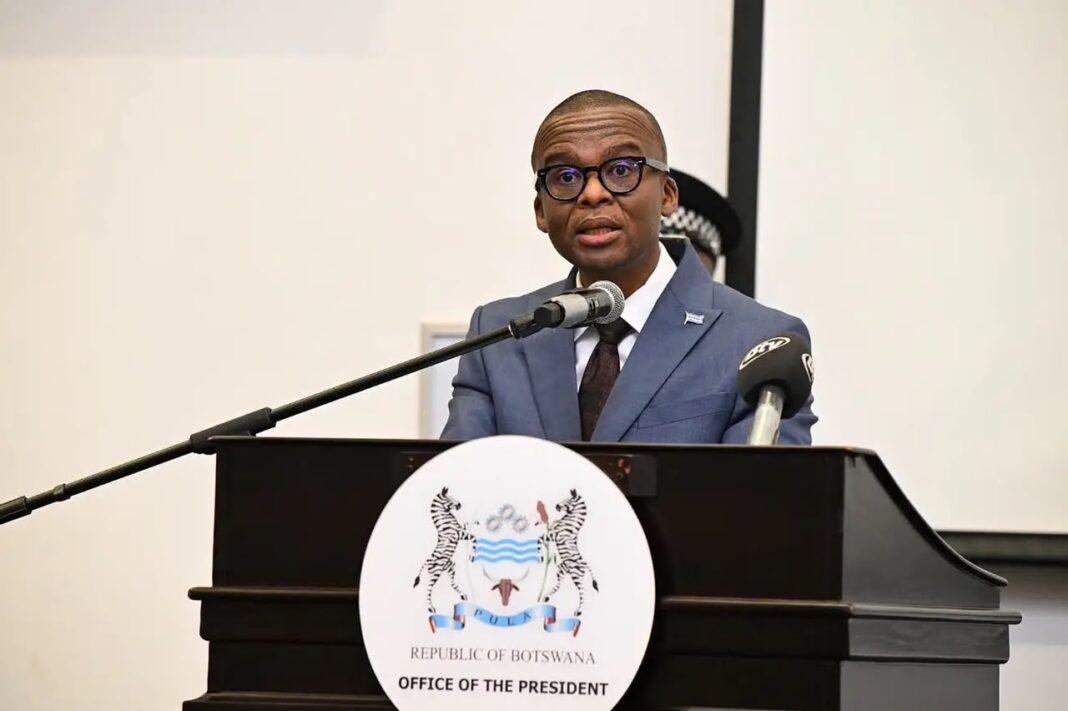

Addressing the legislature on the essence of public debate, President Boko challenged the Hansard’s historical fixation on distributive justice and allocative quibbling, urging a decisive shift toward productive transformation and the real economy. Yet productive growth, he argued, cannot take root without restoring unimpeachable public credibility and trust. In March 2025, the administration commissioned a comprehensive National Forensic Audit Programme undertaken by independent international investigators Alvarez and Marsal. The audit examined governance, procurement, and financial oversight across thirty public institutions between 2014 and 2024. The completed findings revealed staggering systemic failures, identifying suspected fraud, corruption, embezzlement, and financial mismanagement that cost the nation an estimated thirty-three billion Pula.
Pledging that these systemic weaknesses will be systematically repaired over the next two to three years, President Boko announced the full adoption of the audit’s recommendations. The government is rolling out Forensic Audit Government Effectiveness Mechanisms alongside a specialized Special Investigations and Asset Recovery Task Force. Bolstered by targeted capacity-building within the Directorate of Public Prosecutions, the state has committed to tracing stolen funds, prosecuting offenders, and ensuring that public resources are vigorously defended ahead of international financial crime assessments slated for July 2027. This institutional reboot coincides with key leadership appointments, notably Batlhalefi Josti Moeletsi as Director General of the Directorate on Corruption and Economic Crime, and Professor Lekoko Kenosi as Director General of the Directorate of Intelligence and Security.
Parallel to fiscal integrity, the President unveiled an epochal milestone in human rights and restorative justice. Following formal recommendations from an Inter-Ministerial Committee established in February 2026 to investigate the historical grievances of indigenous populations, the government has approved the formal restitution of 52,000 square kilometers of ancestral land within the Central Kalahari Game Reserve to its indigenous communities. The initiative constitutes the largest structured return of ancestral land rights to an indigenous population inside a protected conservation area in African history, designed to harmonize community dignity with modern wildlife management.
This drive toward accountable governance extends directly into constitutional design. Parliament has enacted the Constitution Amendment Bill of 2025, providing for the creation of an independent Constitutional Court as the supreme arbiter of constitutional interpretation and human rights protection. In adherence to Section 89 of the Constitution, the reform will be placed before citizens in a national referendum, accompanied by a broad public review of democratic institutions, executive authority, and state accountability. Governance over state assets is being overhauled in equal measure; Cabinet approved the State-Owned Enterprises Ownership Policy, establishing dedicated guidelines for board appointments and creating a State-Owned Enterprises Oversight Authority to enforce commercial profitability, strict accounting standards, and operational discipline across all parastatals.