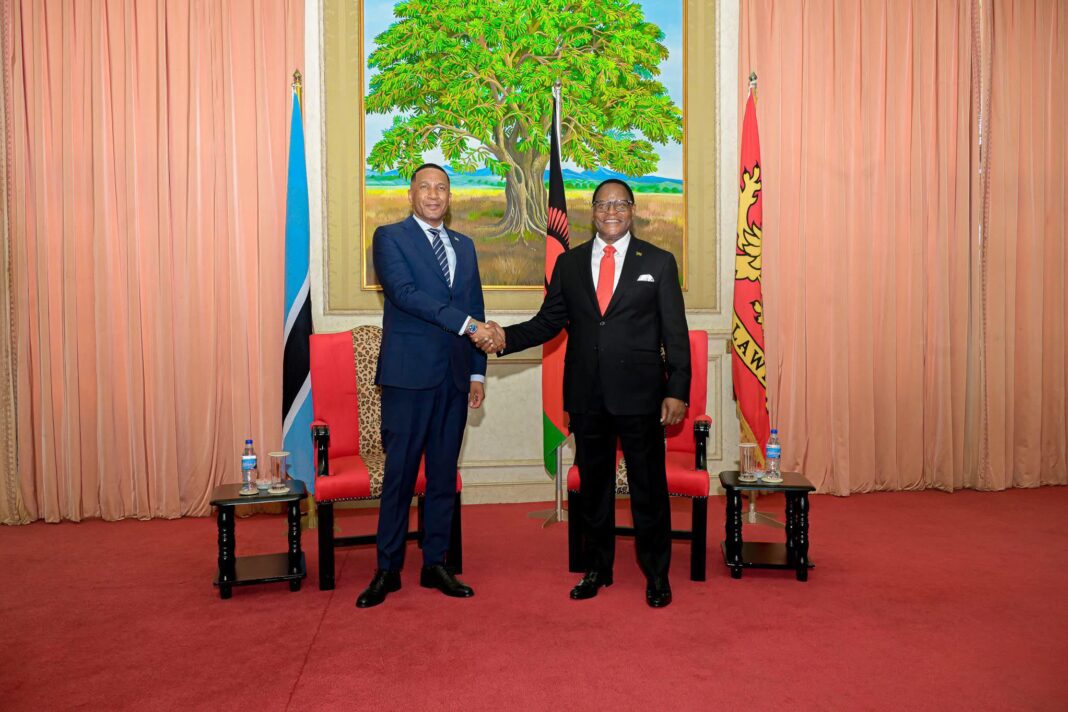

In a significant move set to bolster regional economic cooperation, Botswana and Malawi have officially cemented two pivotal Memorandums of Understanding (MOUs). These agreements, focusing on aquaculture development and inland fisheries management and a strategic partnership between their respective investment promotion agencies, signal a deliberate and ambitious drive to enhance bilateral trade and investment.
The signing ceremony, witnessed by President Advocate Duma Gideon Boko of Botswana and President Dr. Lazarus Chakwera of Malawi, underscored a shared vision for strengthening and deepening bilateral relations. The immediate signing of these two distinct yet complementary MOUs, rather than a single broad agreement, suggests a pragmatic and targeted approach to bilateral cooperation, aiming for immediate and measurable impact.
Deepening Bilateral Ties: The New Agreements Unpacked
MOU on Aquaculture Development and Inland Fisheries Management
This agreement is being lauded as a “historic Memorandum of Understanding” for regional cooperation, explicitly aiming to boost food security, create socio-economic opportunities, and promote climate-smart, sustainable practices in fisheries and aquaculture. This comprehensive approach recognizes the multi-faceted benefits of a thriving aquatic sector.
The MOU outlines key areas of focus, including the development of innovative aquaculture systems, strengthening fisheries management and biosecurity, empowering vulnerable communities through targeted capacity building, and enhancing collaborative research and knowledge sharing. The explicit emphasis on “climate-smart, sustainable practices” and “biosecurity” is a direct response to challenges faced by Malawi’s fisheries sector, such as extreme overfishing and devastating disease outbreaks. A dedicated Aquaculture and Fisheries Technical Committee has been established to oversee joint actions and monitor progress through regular bi-annual meetings.
MOU between Botswana Investment Trade Centre (BITC) and Malawi Investment Trade Centre (MITC)
This crucial MOU, founded on the principles of “Equal Rights & Mutual Benefits,” establishes a framework for reciprocal economic advantage. Through this agreement, the two national investment centres have committed to exchanging valuable data on economic conditions, laws, and regulatory frameworks, designed to foster informed business decisions.
A key objective is to actively identify high-potential sectors for investment and trade and proactively encourage private sector participation in trade exhibitions. The centers will also collaborate on developing joint projects and trade missions, all geared towards deepening economic ties and fostering a more integrated business environment. This MOU directly addresses practical barriers to cross-border trade and investment, such as information asymmetry, particularly acute given the currently minimal bilateral trade volumes (totalling around $1.2 million in exports and $1.1 million in imports in 2022).
Economic Context: A Tale of Two Economies
Malawi, one of the world’s least-developed countries, has an economy overwhelmingly agricultural, employing over 80% of the population. It grapples with pervasive poverty, chronic food insecurity, and high inflation. The aquaculture and fisheries MOU is not merely an economic opportunity but a critical food security and climate resilience strategy for Malawi, which is highly vulnerable to climatic shocks.
Botswana, in contrast, is one of the world’s fastest-growing economies, primarily driven by diamond mining. Recognizing the risks of over-reliance on diamonds, the government is actively pursuing aggressive diversification initiatives. While agriculture contributes only a small percentage to Botswana’s GDP and meets only about 50% of its food needs, this creates a strong incentive for engaging with Malawi on trade and aquaculture. This partnership offers a viable market for Malawian produce and a promising new sector for Botswana’s investment, directly supporting its diversification agenda and food security goals.
Strategic Significance: Beyond Bilateral Benefits
The fisheries sector is paramount to Malawi’s economy and livelihoods, contributing significantly to its GDP and providing employment for over 700,000 people. Despite its importance, Malawi faces a substantial annual fish supply gap. The aquaculture MOU offers a mutually beneficial solution where Malawi can leverage its expertise to meet Botswana’s growing fish demand, while Botswana’s investment and market access can help Malawi overcome production bottlenecks and sustainability challenges.
The BITC-MITC MOU is designed to be a catalyst for economic activity, fostering informed business decisions and encouraging private sector participation. The specific and relatable ambitions articulated by the presidents underscore the practical goals: President Chakwera’s desire for “the famous Kilombero Malawi rice on dinner tables in Gaborone,” and President Boko’s wish for “high quality Botswana beef to be served and consumed in Malawi.” These statements provide concrete targets for trade and highlight identified, high-potential agricultural products that could form the backbone of initial trade successes.
Botswana and Malawi share a deep-rooted diplomatic history, having established relations in 1967 and maintaining strong ties as members of the Commonwealth and SADC. This provides a robust political foundation for these new economic agreements. While both nations are members of SADC, and Malawi is also a member of COMESA (which Botswana is not), these bilateral MOUs serve as a pragmatic mechanism to forge direct, targeted economic links without being constrained by the slower pace or broader complexities of multilateral regional integration efforts.
Challenges and Opportunities Ahead
For Malawi, challenges in aquaculture include high start-up costs, limited technical knowledge, inadequate access to quality inputs, and disease impacts. For Botswana, aquaculture is nascent, facing obstacles such as inadequate finance and underdeveloped infrastructure. The MOUs provide a crucial framework, but their ultimate success hinges on addressing these deep-seated systemic issues and fostering the nascent industry in Botswana.
The effectiveness of the BITC-MITC MOU will be critical, as it directly addresses practical friction points like information asymmetry that impede cross-border private sector engagement. Their ability to bridge information gaps, streamline regulatory processes, and provide consistent support is fundamental to unlocking the full economic potential envisioned by both presidents.
The specific and aspirational statements made by the two leaders serve as powerful symbols of the tangible benefits envisioned from these agreements, signaling a strategic move to foster deep, concrete economic integration and mutual prosperity. The timing of President Boko’s state visit to Lilongwe for Malawi’s 61st Independence celebrations provides a significant symbolic backdrop, emphasizing the enduring friendship, shared history, and a collective commitment to a prosperous future between the two nations.