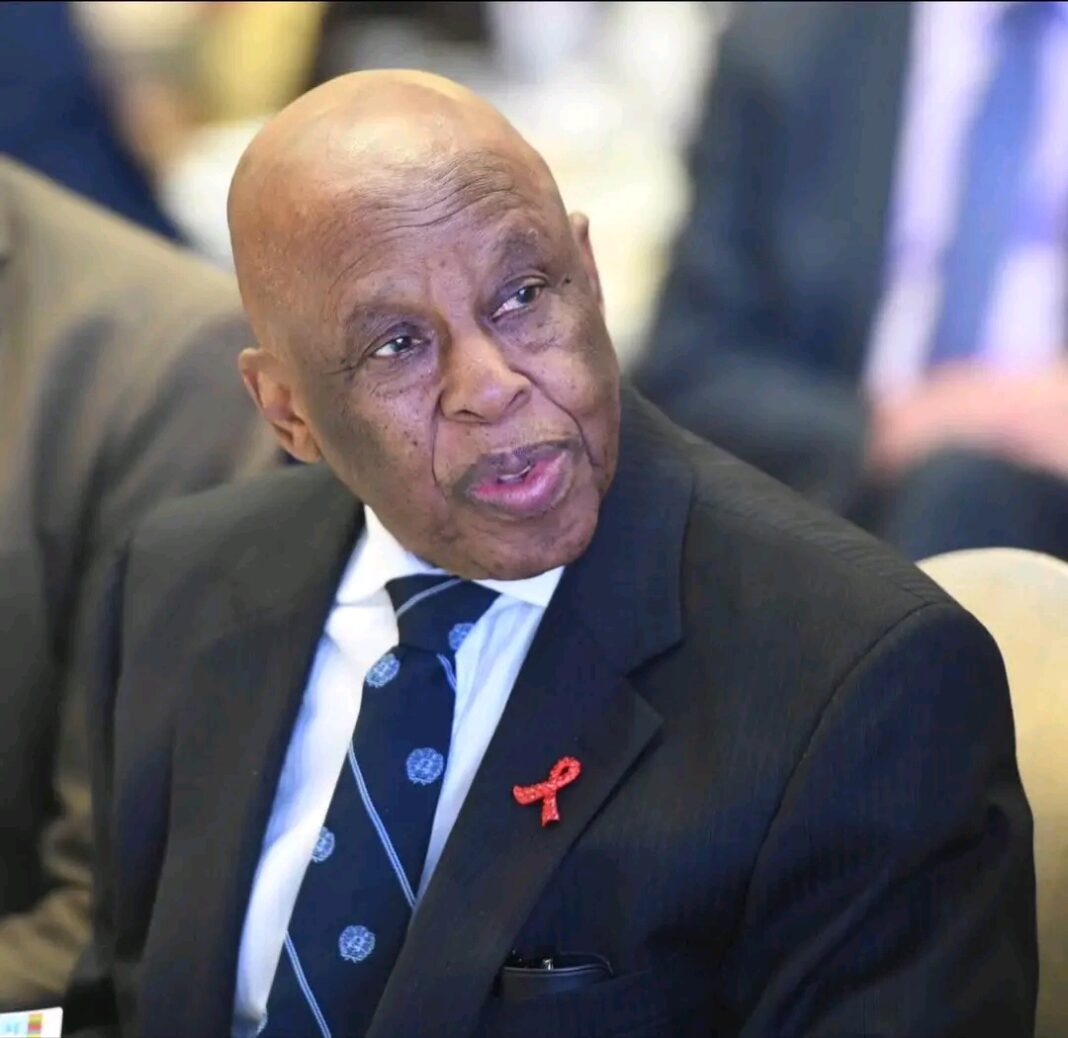

By Keolebogile Lebo Diswai
The Sudden Feeling of Economic Silence
For several years now, many indicators have suggested that Botswana’s economy has been under significant strain. Rising youth unemployment, weakening household purchasing power, slowing private sector growth, increasing inequality, and growing frustration among small businesses have all pointed to deeper structural stress within the economy.
Yet, paradoxically, many people did not fully feel the depth of the crisis until recent anti-corruption crackdowns and governance interventions began disrupting long-established systems of money circulation. Suddenly, businesses began complaining of reduced cash flow. Contractors struggled with delayed payments and fewer opportunities. Consumption patterns weakened. Ordinary citizens began openly asking: “Where has the money gone?”
This moment raises an uncomfortable but necessary question: Was a significant portion of visible economic movement being sustained not by productive economic growth, but by distorted and often unsustainable financial flows linked to corruption, patronage, and procurement leakages?
The Illusion of Economic Activity
This is a phenomenon economists, governance scholars, and political analysts often observe in states where corruption becomes deeply embedded in the economic system. Illicit or inefficient flows can create the illusion of economic activity, even while the underlying productive economy weakens.
A few realities can exist simultaneously. An economy can be structurally weakening for years, while corruption and patronage networks continue injecting liquidity into circulation. When anti-corruption measures suddenly disrupt those networks, the slowdown becomes more visible to ordinary people.
That does not automatically mean that most money in the economy was “illicit”. Botswana still has substantial legitimate economic activity through mining, public sector salaries, retail, telecommunications, banking, agriculture, tourism, transport, and construction. These sectors continue to form the backbone of the national economy.
However, it may also be true that a meaningful share of circulating cash, procurement spending, inflated tenders, rent-seeking arrangements — where individuals, companies, or networks make money not by creating real economic value or productivity, but by using political influence, insider access, or control over public resources to extract financial benefits — as well as leakages and politically connected expenditure, had become deeply intertwined with everyday economic activity.
When Corruption Becomes Part of the Economic System
In many economies, particularly where the state is the dominant economic actor, corruption does not exist outside the economy. It becomes embedded within the circulation system itself. Inflated procurement contracts, ghost projects, overpricing, politically connected subcontracting, leakages of public funds, and kickbacks recycled into property, vehicles, retail consumption, hospitality, and lifestyle spending all create visible economic movement. People continue buying. Construction sites remain active. Money “appears” to circulate. Businesses survive through state-linked spending. Vehicles are purchased, properties are developed, and hospitality venues remain busy.
But beneath the surface, much of this activity may not represent genuine productive growth. It may instead reflect a circulation economy built heavily around state expenditure, procurement dependency, and politically mediated access to resources.
Mistaking Circulation for Productivity
One of the greatest dangers in any economy is mistaking circulation for productivity. Money moving rapidly through an economy does not necessarily mean that the economy is becoming more productive, competitive, innovative, or resilient.
An economy can appear active while simultaneously suffering from weak industrialisation, low export diversification, stagnant productivity, overdependence on government spending, limited innovation, fragile private sector development, and high youth unemployment.
This is particularly important in consumption-driven economies where spending itself becomes mistaken for sustainable growth. Visible activity can mask deeper dysfunction. As long as money continues moving noisily through procurement systems, politically connected networks, and consumption cycles, the underlying weaknesses may remain hidden from public consciousness.
Chaos often obscures structural decay.
Why the Slowdown Suddenly Feels Severe
When anti-corruption measures intensify, the effects are often immediate and psychologically jarring. Procurement slows, payments freeze, officials become risk-averse, projects stall pending review, politically connected networks pause spending, and cash circulation tightens.
Because many sectors may have become indirectly dependent on these flows, the contraction becomes highly visible to ordinary citizens. Small businesses feel it first. Contractors feel it quickly. Retailers experience reduced spending. Service providers notice slower payments. Households begin adjusting consumption patterns.
The result is a difficult paradox: cleaning up corruption can initially make the economy feel worse before long-term benefits materialise. This has happened in many countries undergoing governance reform transitions.
For example,in Angola, anti-corruption crackdowns and efforts to dismantle politically connected business networks following years of oil-fuelled patronage led to a slowdown in sectors that had become dependent on state-linked contracts and elite spending. While reforms were aimed at improving governance and restoring fiscal discipline, ordinary businesses and households initially experienced tighter cash circulation and economic uncertainty.
South Africa has also experienced elements of this dynamic following investigations into “state capture.” As procurement systems came under scrutiny and governance reforms intensified in state-owned enterprises, some sectors experienced delays, stalled projects, and reduced spending as institutions became more cautious and regulatory oversight increased.
Even outside Africa, countries such as Indonesia after the Asian Financial Crisis, and parts of Eastern Europe after the fall of communist-era patronage systems, experienced periods where dismantling corrupt or politically protected economic structures initially caused contraction, uncertainty, and public frustration before more stable and productive systems gradually emerged. Once distorted flows are interrupted, the real strength or weakness , of the productive economy becomes exposed.
These examples illustrate that when corruption becomes deeply woven into economic circulation, reform can create short-term pain because distorted flows had, for years, been sustaining visible activity.
The challenge for governments is ensuring that anti-corruption efforts are quickly followed by productive investment, institutional efficiency, private sector growth, and job creation so that citizens begin experiencing the benefits of a cleaner economy.
Botswana’s Structural Challenge
Botswana remains one of Africa’s more institutionally stable economies, with important strengths that include political stability, a historically prudent fiscal framework, a respected banking system, mineral wealth, and relatively strong governance foundations compared to many peers.
However, several structural vulnerabilities have become increasingly difficult to ignore. These include overdependence on diamonds, excessive state centrality in economic activity, procurement dependency, weak economic diversification, limited manufacturing capacity, high youth unemployment, and slow private-sector expansion.
The challenge now is not simply to disrupt corruption networks. The deeper challenge is to replace distorted economic circulation with productive economic activity.
Beyond Anti-Corruption
Anti-corruption efforts are necessary for national renewal. No economy can sustainably develop when public resources are continuously undermined by leakages, patronage, and inefficiency. But anti-corruption alone cannot become the economic strategy. A vacuum must be filled.
Botswana now faces the urgent task of building productive industries, competitive local enterprises, agro-processing capacity, manufacturing, innovation ecosystems, export-oriented sectors, infrastructure productivity, and broad-based entrepreneurship.
Without this second phase, citizens may experience only the pain of disrupted cash flows without seeing the benefits of economic transformation. That is the danger.
What Needs to Happen: A Policy Agenda
Filling the vacuum left by disrupted patronage flows requires more than goodwill. It demands a concrete, sequenced policy agenda that can translate governance reform into tangible economic activity. Three priorities stand out as urgent and actionable.
The first is accelerating economic diversification beyond diamonds. Botswana’s overwhelming dependence on a single commodity was always a structural risk; it has now become an emergency. Diamond revenues fell by approximately fifty percent in the first nine months of 2024 alone, driven by collapsing global prices and the rapid rise of lab-grown alternatives. The government’s Botswana Economic Transformation Programme, launched in mid-2025, and the newly established Sovereign Wealth Fund point in the right direction, but pace matters enormously. Special Economic Zones need to be activated with genuine speed and investor incentives. Tourism, renewable energy, agro-processing, and financial services each represent sectors where Botswana holds comparative advantages that remain largely untapped. Diversification cannot remain a long-term aspiration; it must become an immediate operational priority with measurable targets and ministerial accountability attached to each sector.
The second priority is rebuilding procurement as a driver of productive growth rather than merely a system of resource allocation. Overhauling a corrupted procurement system risks creating a different problem: paralysis. Officials, understandably fearful of scrutiny, may become so risk-averse that legitimate projects stall alongside corrupt ones. The answer is not slower reform but smarter reform. Streamlined procurement pathways for small and medium enterprises, fast-tracked approval processes for infrastructure investment, and clear timelines for payment to contractors would signal that the state intends to remain an active economic participant, only now, a cleaner one. Citizens and businesses need to experience the reformed system delivering, not just dismantling.
The third priority is a serious and sustained investment in youth employment. With youth unemployment exceeding 40% by most measures, Botswana faces not merely an economic problem but a social stability risk. Skills development programmes must be designed around the sectors the economy is actually trying to build, not the sectors that existed under the old model. Vocational training aligned to renewable energy installation, digital services, tourism hospitality, and agro-processing can begin creating pathways to employment within a two-to-three year horizon, rather than waiting for industrialisation to mature over a decade. A young population demanding accountability and opportunity is an asset when that energy is channelled productively; it becomes a liability when it is not.
Underlying all three priorities is a harder political task: managing public expectations through the transition. Reform-era governments in Angola, South Africa, and Eastern Europe all discovered that citizens who supported change can become disillusioned surprisingly quickly when the pain of disruption outlasts the arrival of visible benefits. Communication must be as deliberate as policy. Explaining why the economy feels tighter, what is being built to replace what was dismantled, and on what timeline ordinary people can expect to feel the difference, these are not just soft political tasks. They are essential to sustaining the public will that makes reform durable.
A Moment of Exposure , and Possibility
If reforms merely stop the old circulation systems without creating new productive engines of growth, frustration will deepen. But if this moment becomes a genuine transition toward a more productive, diversified, and innovation-driven economy, Botswana could emerge stronger and more resilient.
The current discomfort may therefore represent more than an economic slowdown. It may be the exposure of structural realities that had long been concealed beneath the noise of circulation.
Where chaos exists, deeper dysfunction often hides in plain sight.
Yet moments of exposure can also become moments of renewal. Botswana still possesses many of the foundations that countries in crisis often lack: political stability, functioning institutions, social cohesion, natural resources, and a population increasingly demanding accountability, innovation, and inclusive growth. If the country is able to pair governance reform with bold investments in productive sectors, entrepreneurship, education, industrialisation, and private sector expansion, this period could mark not the decline of the economy, but the painful beginning of its restructuring and renewal.
The true measure of success will not simply be the disruption of corruption networks, but the building of an economy where prosperity is created through productivity, innovation, fairness, and opportunity. Botswana now stands at a potentially transformative crossroads, one that could define the country’s economic trajectory for generations to come.