
Staff Writer
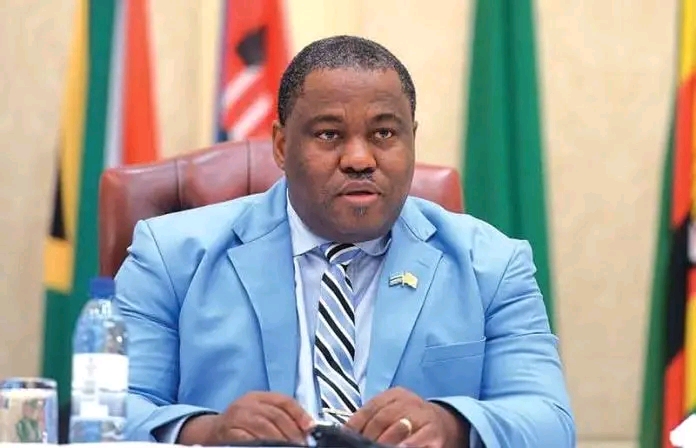
The Director of Public Prosecutions (DPP) has filed an urgent application at the High Court to freeze the assets of former Minister of Mineral Resources, Green Technology and Energy Security, Lefoko Maxwell Moagi.
In court papers filed on December 24, 2025, the state alleges that Moagi is at the centre of a corruption and money laundering scandal involving Chinese companies that were awarded tenders and mining licenses falling under his ministry during his tenure.
The DPP is seeking a restraining order to prevent Moagi and his associates from selling or hiding specific assets including a herd of cattle and millions of Pula in cash while law enforcement agencies finalize their investigations.
Cattle, Cash, and Conflicts of Interest
The application, supported by an affidavit from Directorate on Corruption and Economic Crime (DCEC) Principal Investigator Tendani Christinah Setume, paints a picture of a minister who allegedly used his position to benefit from companies doing business with the government.
The investigators claim that Moagi acquired these assets through “serious crime-related activities,” specifically corruption, possession of unexplained property, and money laundering.
According to the affidavit, in August 2024, Moagi sought to purchase 100 heifers and a bull. However, the bill was reportedly footed by senior employees of Sieyuan Electric Botswana, a company that had been awarded lucrative tenders by the Botswana Power Corporation (BPC)-a parastatal that fell directly under Moagi’s ministerial portfolio.
Court papers detail that two managers from Sieyuan allegedly paid a total of P417,500 for the cattle on Moagi’s behalf.
To hide the trail, one payment was made in cash (P300,000) using a false name (“Jeremy Holiday”), while the other was transferred from a personal account.
The cattle were branded and transported to Moagi’s farm.
In a twist described by investigators as a “cover-up,” the parties allegedly met in Ramotswa in April 2025 after the government had changed and rumours of an investigation began to swirl. There, they reportedly signed a backdated “soft loan” agreement to make the corrupt payment look like a legitimate loan.
The Wisecreatives “Slush Fund”
According to court documents, the most significant financial allegation involves a company called Wisecreatives Investments (Pty) Ltd. The DPP alleges this company was used as a conduit to launder money from New Energy Company (Pty) Ltd, a firm that had recently been granted eight prospecting licenses for base metals by Minister Moagi.
Investigators assert that
between May and October 2024, New Energy Company and another linked firm, Riders (Pty) Ltd, transferred a total of P4.7 million into the Wisecreatives bank account.
The Wisecreatives account had a debit card, which was allegedly handed over to Moagi for his personal use.
Bank records cited in the affidavit show the card was used for Moagi’s personal expenses, including school fees for his son in South Africa, building materials, and everyday purchases.
The investigator states, “This is a classical case of money laundering where the consideration has been so disguised to hide its true source.”
Assets Targeted for Seizure
The DPP has asked the High Court to issue a Rule Nisi (an interim order) to immediately lock down the following property to prevent it from disappearing being
the cattle: specifically 97 heifers branded “JC over YN” and one bull branded “4W over 5,” currently located at Moagi’s farm, the Bank Balance which is a sum of P2,824,311.85 remaining in the Wisecreatives Investments account held at Bank Gaborone.
The application was brought on an ex parte basis, meaning the state approached the court without initially notifying Moagi. The DPP argued this was necessary because the assets are mobile (cattle and cash) and could easily be “dissipated” (hidden or spent) if the suspects were tipped off before the order was granted.
If the court grants the order, the assets will be placed under the control of a court-appointed Receiver. Moagi, his wife (who is listed as an interested party), and the involved companies will then be given a date to appear in court to argue why the order should not be made final.
The DPP asserts that these assets are the “proceeds of crime” and must be preserved so they can eventually be forfeited to the state if the corruption allegations are proven in court.