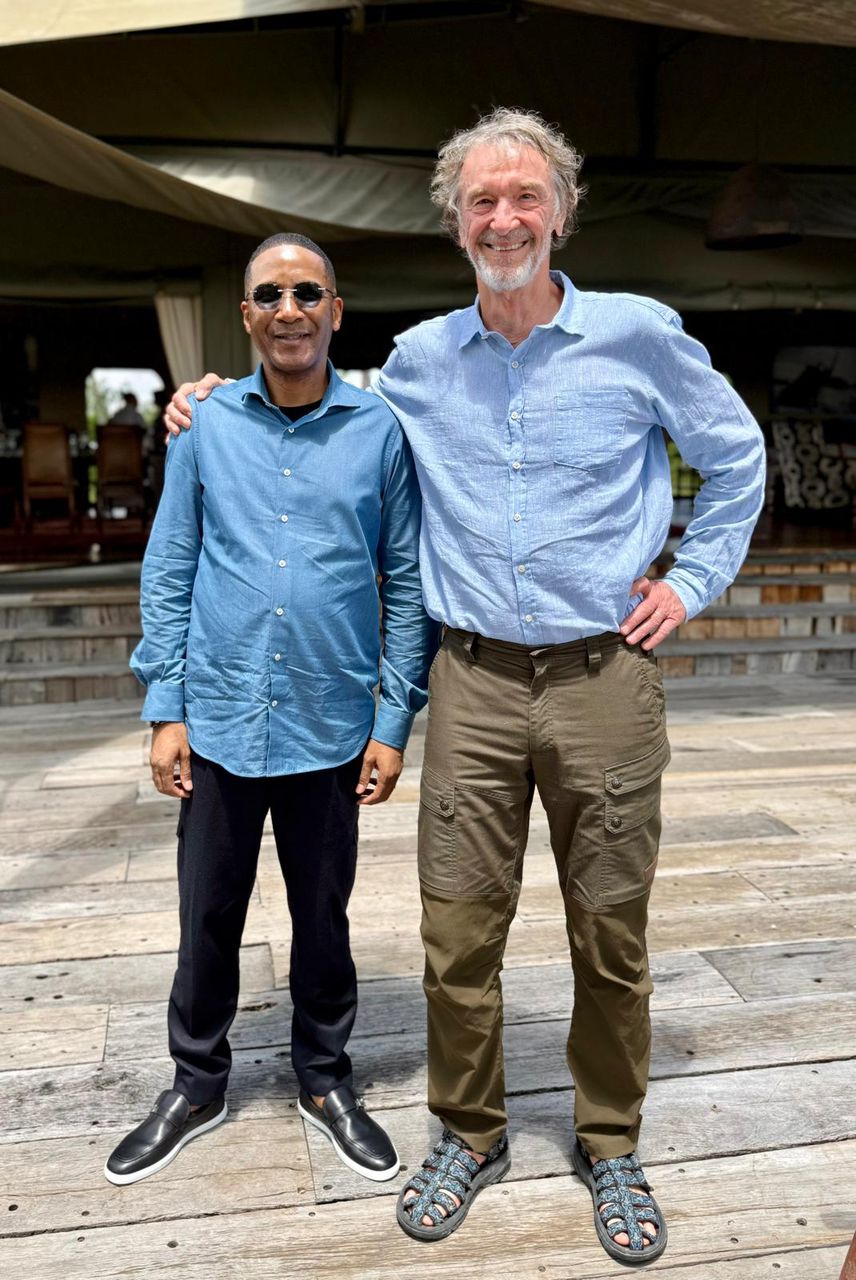

The tranquil, breathtaking gateway to the Okavango Delta was the site of a heavyweight summit over the weekend, as President Duma Gideon Boko hosted British billionaire and Manchester United co-owner Sir Jim Ratcliffe. Set against the backdrop of Maun’s natural splendour, the meeting between the Head of State and the INEOS chairman touched on critical avenues for Botswana’s economic diversification and international partnerships, signalling a bold, forward-looking agenda for the nation as it charts its course toward 2029 and beyond.
While Sir Jim Ratcliffe is globally recognised for his petrochemical empire and his high-profile leadership of Manchester United’s football operations, his ties to Botswana are already firmly established on the ground. INEOS Automotive operates a vital, expanding facility right in Maun: INEOS Kavango.
Formerly known as Kavango Engineering before its acquisition by INEOS, this 5,000-square-meter facility is a hub of specialised automotive manufacturing. Employing a highly skilled local workforce of 70 people, INEOS Kavango completes approximately 200 ground-up vehicle conversions a year. The team takes partially built INEOS Grenadiers—shipped directly from the factory—and transforms them into bespoke, rugged utility vehicles tailored for conservation, anti-poaching, veterinary services, primary healthcare, and film production. Notably, the facility is currently gearing up for the 2026 production launch of the “Grenadier Game Viewer,” a dedicated factory-backed safari 4×4 inspired by Ratcliffe’s own experiences in the African bush.
Beyond the hum of the manufacturing floor, the weekend’s dialogue pivoted to another of Ratcliffe’s great passions: sports. With the INEOS sports portfolio boasting Manchester United, French Ligue 1 side OGC Nice, and Swiss club FC Lausanne-Sport, the discussions explored the vast, untapped potential of sports in Africa.
The two leaders discussed potential future collaborations in football between Botswana and Ratcliffe’s sporting assets. Such high-level international synergies present a golden opportunity to elevate the domestic game. The prospect of sharing technical expertise, elite operational blueprints, and youth development strategies could serve as a massive catalyst for local football. Whether it means establishing robust Football Development Trusts to nurture grassroots talent or opening doors for storied domestic clubs to explore international technical partnerships, the implications for the local sporting economy are immense.
As Botswana sets its sights firmly on the horizon of the economic landscape of the next decade, partnerships of this calibre will be crucial. By marrying local industrial investment with global sporting exchange, the weekend’s meeting in Maun represents a blueprint for a dynamic, internationally connected Botswana.